

Driving in Hua Hin: The Ultimate Car and Motorbike Rental Guide
Hua Hin is a relatively easy city to navigate compared to the frantic pace of Bangkok. However, having your own wheels provides the freedom to explore hidden beaches, remote mountains, and local markets at your own pace.
1. The Great Debate: Car vs. Motorbike
Choosing the right vehicle depends on your budget, comfort level, and the size of your group.
Motorbikes: These are the most popular choice for solo travelers and couples. They are affordable, easy to park, and allow you to zip through traffic during busy weekends.
Cars: For families or those who prioritize safety and air conditioning, a car is the better option. It is particularly useful for grocery shopping or traveling during the rainy season.
2. Legal Requirements & Documents
Before you sign a rental agreement, ensure you have the necessary paperwork to avoid legal trouble or insurance complications.
International Driving Permit (IDP): You must possess an IDP that corresponds to the vehicle type you are renting (car or motorcycle).
Passport: Most rental shops will ask for your passport. It is highly recommended to provide a photocopy and a cash deposit rather than leaving your original passport with the shop.
Deposit: Expect to pay a security deposit. For motorbikes, this is typically between 3,000 and 5,000 THB, while cars may require 5,000 to 10,000 THB.
3. Motorbike Rental Guide
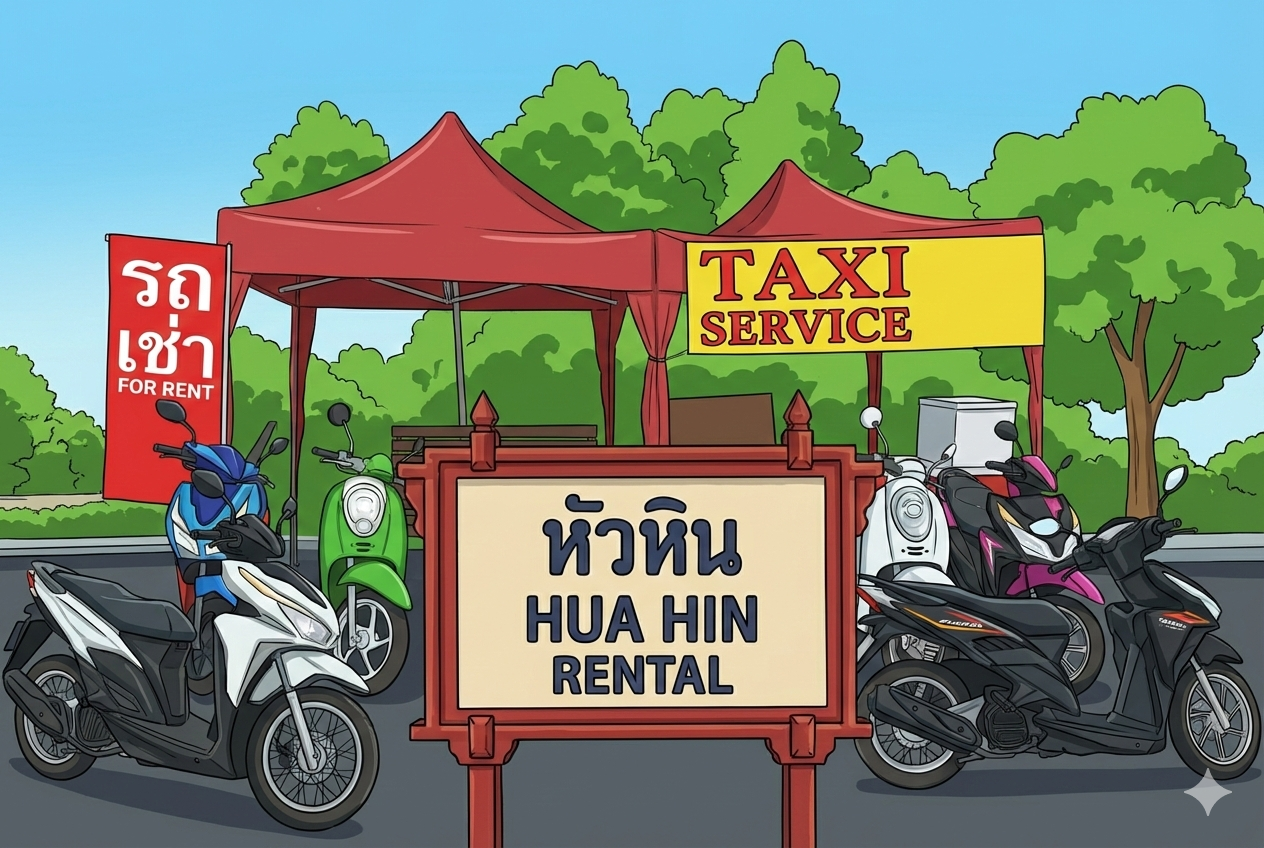
Motorbikes, often referred to as “scooters” locally, are available on almost every street corner in the city center.
Monthly Rates: For seasonal stayers, monthly rates are significantly cheaper than daily rentals. Expect to pay between 2,500 and 4,000 THB per month depending on the model and condition.
Safety Check: Always inspect the brakes, tires, and lights before taking the bike. Wear a helmet at all times—not just for safety, but to avoid fines at police checkpoints.
Photos: Take clear photos or a video of the bike from all angles before leaving the shop to document any existing scratches.
4. Car Rental Guide
If you prefer a car, you can choose between international brands or local independent renters.
International Brands: Companies like Avis and Hertz operate at Hua Hin Airport and offer newer vehicles with comprehensive first-class insurance.
Monthly Rates: A standard sedan typically costs between 15,000 and 25,000 THB per month.
Insurance: Ensure your rental includes “No Excess” insurance so you aren’t liable for a large sum in the event of a minor accident.
5. Understanding the Rules of the Road
Driving in Thailand has its own set of unwritten rules and specific local regulations.
Parking Colors: Pay attention to the curb markings. Red and white lines mean no parking at any time. Yellow and white lines indicate a short-term parking or a bus stop area where parking is generally prohibited.
Police Checkpoints: Police often set up checkpoints, particularly near Wang Klai Kangwon Palace or the airport tunnel. They primarily check for helmets and valid driving licenses.
Fuel Policy: Most rentals follow a “full-to-full” policy. You receive the vehicle with a full tank and must return it the same way.
6. How to Avoid Common Rental Scams
While most shops in Hua Hin are honest, it is wise to be aware of the “scratch scam.” This involves a renter being charged for pre-existing damage. Documenting the vehicle’s condition with photos at the start of the rental is the best way to protect yourself.