

Beyond the Beach: National Parks & Nature Escapes around Hua Hin
Hua Hin is unique. Turn East, and you have the ocean. Turn West, and you face a majestic mountain range that separates Thailand from Myanmar.
If you are tired of the sun lounger and want to trade sand for jungle, you are in luck. Hua Hin is the gateway to some of Thailand’s most spectacular National Parks. From hidden pavilions inside limestone caves to spotting wild elephants in their natural habitat, here is your guide to the wild side of Hua Hin.
1. The Icon: Khao Sam Roi Yot National Park
Distance: 45 minutes south of Hua Hin.
The Vibe: Its name translates to “The Mountain of 300 Peaks.” Imagine dramatic limestone cliffs rising straight out of the marshes and the sea. It looks like Halong Bay on land.
The Must-Do: Phraya Nakhon Cave
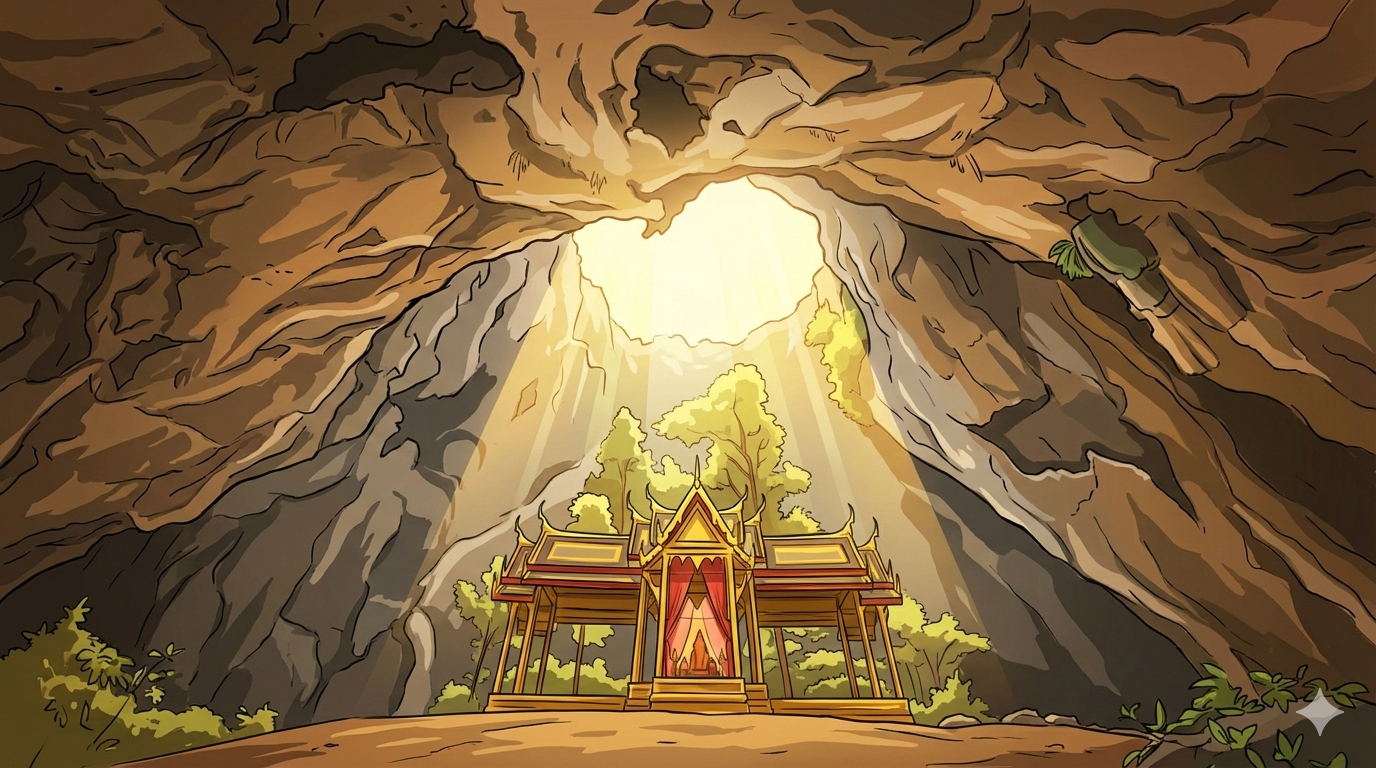
This is the symbol of Prachuap Khiri Khan province. Inside a massive collapsed cavern sits the Kuha Karuhas Pavilion, a stunning royal pavilion built in 1890 for King Rama V.
The “Magic Moment”: Visit between 10:30 AM – 11:30 AM. This is when the sunbeam shines through the ceiling hole and illuminates the golden pavilion. It is magical.
The Effort: You have to work for it! It involves a boat ride around the headland followed by a steep 430-meter hike up (approx. 30-45 mins). Wear sneakers, not flip-flops.
2. The Thai Safari: Kuiburi National Park
Distance: 1.5 hours south of Hua Hin.
The Vibe: Forget zoos and elephant riding. This is the best place in Thailand to see wild elephants free in nature. It is known as the “Safari of Thailand.”
The Experience:
You cannot drive your own car inside. You must hire a park ranger and a local pickup truck driver.
You stand in the back of the open-air truck as it drives through the grassland.
Success Rate: There is a 99% chance of seeing herds of wild elephants (and often Gaur/Bison) coming out to feed and play in the waterholes.
Best Time: Late afternoon only (2:00 PM – 6:00 PM).
3. The Jungle Waterfall: Pala-U Waterfall
Distance: 1.5 hours west of Hua Hin.
The Vibe: Located deep in the jungle near the Myanmar border, this waterfall is part of the massive Kaeng Krachan National Park (a UNESCO World Heritage Site).
The Highlights:
Butterflies: It is famous for thousands of butterflies that congregate near the water, especially in the morning.
The Trek: The waterfall has 15 levels. Most people hike to Level 3 (large pool with fish). Levels 4-5 require serious climbing skills.
Warning: The rocks are slippery, and the path is rugged. It’s a real jungle trek.
4. The Easy Nature Walk: Pranburi Forest Park
Distance: 25 minutes south of Hua Hin (near Khao Tao).
The Vibe: If you want nature without the sweat, come here. It is a preserved Mangrove Forest project initiated by the Queen Mother.
The Highlights:
The Boardwalk: A well-maintained wooden walkway (1 km) winds through the dense mangrove roots. It’s flat, shady, and peaceful.
Golden Meadow: Climb the small tower to see the view of the mangroves meeting the sea.
Long-tail Boat: You can hire a boat for a relaxing 30-minute cruise through the river.
Practical Tips for Nature Lovers
Transport is Key: These parks are not accessible by public songthaew.
Option A: Rent a car/scooter (Google Maps works well).
Option B: Hire a private taxi for the day (negotiate a price, usually 1,500 – 2,500 THB).
Option C: Book a tour (safest for Kuiburi and Pala-U).
Dress Code:
Cave & Waterfall: Sneakers/Trainers are mandatory. The rocks are sharp and slippery.
Mosquitoes: The jungle (especially Pala-U) is full of them. Bring strong repellent (DEET).
Monkeys: At the entrance of Phraya Nakhon Cave and Pala-U, monkeys will try to steal food. Keep snacks in your bag, not in your hand!
Final Verdict: Which Park is for You?
or Photographers: Phraya Nakhon Cave (Sam Roi Yot) – The light is incredible.
For Animal Lovers: Kuiburi National Park – Seeing wild elephants is unforgettable.
For Families/Seniors: Pranburi Forest Park – Easy walking, safe, and relaxing.
For Hikers: Pala-U Waterfall – A challenging jungle trek.
Want to see the wild elephants? Book your [Private Driver to Kuiburi National Park] here.